Showing posts with label Book Reviews. Show all posts

Wednesday, November 29, 2006

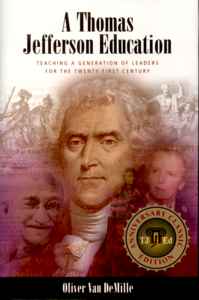
A Thomas Jefferson Education


This book, by Oliver DeMille is a must read. The leadership education he describes in this book is one that many parents are seeking for their children. These ideas can be implemented with many other "brands" of education. The 7 key elements to this are:
  1. Classics not Textbooks
  2. Mentors not Professors
  3. Inspire not Require
  4. Quality not Conformity
  5. Structure Time not Content
  6. Simplicity not Complexity
  7. You not Them

Our Favorite Family Read Alouds

One of my family's favorite activities is reading aloud together. Reading together is important to a child's education and development. If kids are too young to sit still for long periods, offer them quiet activities that they can work on while you are reading. Here are some of our family's favorites.

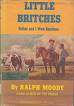
Little Britches Series by Ralph Moody (this is our favorite!)
Little House Books
Narnia Series
Mrs. Piggle Wiggle series
A Child's Garden of Verses
Winnie the Pooh

Monday, November 20, 2006

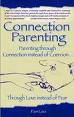
Connection Parenting

Pam Leo has written a simple handbook to help parents start to "parent through connection instead of coercion, through love instead of fear." Each chapter is written with one way to connect, such as respecting children, listening to children's feelings, and decoding children's behavior. Each chapter is then followed by journaling exercises for the parent to do, to help them be able to understand and more fully implement the ideas they are learning about. There is also a great list of resources listed in the back of the book.

When I picked up this book to read it, I was being pretty hard on myself as a parent. Through reading this book, I was able to discover that I did have some talents in parenting, and it helped me to use what I do well more, and not be quite so hard on myself for what I may not do as well as I like.

Wednesday, November 15, 2006

Tools for Parenting

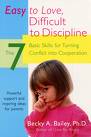
As a veteran mother, and a family life education hobbyist, I have often wondered just why I have a hard time putting into practice the ideals I hold so dear. Reading about what I believe in only gets me so far. Working on parenting programs (a good one is Becky Bailey's Easy to Love, Difficult to Discipline) may get me a step farther, but I always seem to fall back into poor parenting behaviors when the stress level gets high. This is extremely frustrating and disheartening for me.


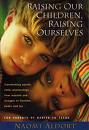
I discovered Naomi Aldort's ideas, bought her book Raising Our Children, Raising Ourselvess, and found some hope. She is realistic in the fact that some behaviors and thought patterns we hold may take years to break, yet gives us the courage to keep trying. Many of Aldort's ideas are based off of Byron Katie. Byron founded The Work, which is a process of questioning your thoughts. I have found that when I use her four questions to rethink my thoughts, I am freed from emotional baggage, and able to concentrate on parenting the way I want to. If you find yourself knowing what you want to do, and unable to do it, I recommend looking into Namoi Aldort's and Byron Katie's ideas.

Monday, November 13, 2006

Money

We all must earn money somehow in order to survive. Most of us marry with at least one bad money habit, usually more, and then we have to somehow blend our habits with the habits of another person. This can help in some aspects, but it can also really hurt. Finacnces can be a big source of contention in marriages and families. My husband and I are frugal hobbyists, and we enjoy reading about all the different ideas of how to save, make, and grow your money.

First, start with Dave Ramsey. If you do not read any other finacial planning book (you want Total Money Makeover), you will survive and thrive if you follow Dave's plan. We like to listen to Dave on the radio at least once a week to keep us motivated and on track. We listen over the internet for free.

Millionaire Next Door is an eye opening look into what millionaires really live like. Understanding how rich people live, helps you to live in the same way. It is written by Thomas J. Stanley, and William D. Danko, two professors who began researching millionaires, and were surprised by what they found.

The Automatic Millionaire by David Bach is another superb book. Simply, make things automatic.

We also like Rich Dad, Poor Dad by Robert Kiyosaki and his Cashflow games. Although we personally take a more conservative approach than what Robert does, his ideas on money will help you think outside the box.

Wednesday, November 08, 2006

Mothering and Fathering by Tine Thevenin

I read this book many years ago and found it very helpful in accepting how my husband parented differently than I did. Here are three Amazon reviews for you to read, and one opposing view written by a father.

If you are seeking to understand why your partner does things differently than you, this book may shed some light for you. This is written by the author of The Family Bed.

Friday, November 03, 2006

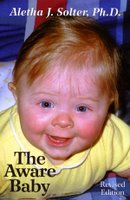
Aletha Solter, her works reviewed

Aletha Solter, a student of Jean Piaget, has written three books for parents that have some valuable thoughts in them. The Aware Baby, Tears and Tantrums, and Helping Young Children Flourish each share a similar message, that is sometime babies just need to cry.

I discovered her books before my third child was born, and gained another parenting tool that became very helpful to me. I have found the cry it out beliefs to be very detrimental to children, and their relationships with their parents. When an infant is left to cry, he learns that he is not heard, and he will not be responded to. He misses out on one of Erik Erikson's stages of development, that of being able to trust. So, I responded to my first two children's cries, even though it was hard at times to do so. I always tried to get them to stop crying, and if they didn't, I felt that I was doing something wrong as a parent. I felt guilty and overwhelmed at times, because I didn't know how to "help" my child.

Solter's ideas helped me to see that I still needed to respond to my children's cries (this is something I just knew instinctively I needed to do), but that sometimes, after all other needs are met, a baby (or child) still has a need to cry.

I like to relate it to myself. When I am distraught, and feel like crying, the best thing for me to do it cry and work it out that way. Often what we do to babies, is to tell them to be quiet, by bouncing, putting a pacifier in their mouth, shushing them, telling them don't have to cry, feeding them, and the list goes on and on. If I was crying, and someone told me to be quiet, or tried to get me to stop when I really needed a good cry, I would resent it. I would not like it, and if I was not allowed to cry, those emotions would be bottled up inside.

All this said, a baby should NEVER be left to cry alone. She should be held close by and you should focus your loving attention on her as she cries. Solter's books go into much greater detail. There is good information to think about in her books. The downside is that the format isn't one that most of us are used to. It is not flashy, and it is set up in a question/answer format. There may be some information that some parents do not feel fits them (as in most books), and if you find that this is the case, then by all means, do not use those ideas!

One of the best things that this book did for me, was to help me realize that crying was not a sign of me being a "bad" parent.
Wednesday, November 01, 2006

Parenting From The Heart by Jan Hunt


This book gently leads a parent to a healthier relationship with her child/ren. It is a reference work that parents can come to again and again to receive a fulfilling boost of approval, yet it challenges us to do better. This book is one of the few books that have helped me truly understand what a child really is, namely another human being on the sojourn of life, albeit in a smaller package. It made me aware that because of that smaller package, children are so often taken advantage of. How many times have you talked about your child's faults to another adult, as your baby stands there and hears each word you say? Would you do the same to another adult? Would you want someone to do that to you? This book addresses that, and helps parents find a better way.

visit Jan Hunt's website The Natural Child Project