I began "wearing" my babies almost ten years ago. The first carrier I ever tried was the OTSBH. I checked it out of a lending library that my lactation consultant had. I was in school at the time, and it became a life saver as I walked the two miles to school and sat in on my class with my newborn son. I soon purchased my own sling, but I choose a Mayawrap. The padding of the OTSBH made me sweat a little too much. My son was a big child, so having this sling was so helpful. There were not a lot of people around using baby carriers, so I stuck out quite a bit with my bright green and blue Maya, but there was no way I was going without it!
My Mayawrap got me through three babies, when I finally gave it to a good friend who had given birth to her fist child. During this time, as "new" baby carriers were being developed and marketed, I experimented with many of them. I can tie a baby on with most anything, and have often just used my coat in a pinch. My favorite carriers are the ones that are the least complicated, but versatile and comfortable. If you can only get one carrier choose between a ring sling or a structured carrier like an Ergo. I recommend that you have a few different types on hand, as you will use them for different things.
Personally, I have found that the structured carriers are my favorite. Once your baby can hold their heads up well (and even before with certain precautions), these carriers are the most convenient and comfortable of them all. I prefer a non-fussy one, like the YAMO (sadly you cannot purchase them in the US anymore), but there are other options available, like the patapum, ergo, and beco.
Next in line would come the ring slings. There are so many beautiful slings available today. I am partial to the unpadded Mayawraps though. They were the first of their kind, and they are of exceptional quality. I have tried making a few of my own ring slings, and I have never quite been able to reproduce the comfort and quality of a purchased sling. If your sewing skills are excellent, you should be able to make a custom carrier for a very good price.
Third, I like pouch style carriers and wraps. Pouches are the easiest to use, as you stick the baby in and go. The only issue you face with them is you will need two sizes to get a proper fit if you get a non-adjustable one, and if you get an adjustable one, the carrier becomes a little more complex (but not much). Wraps have a high learning curve, because they are one long piece of cloth that you tie around yourself and your baby. There are many different ways to do this, and you have to practice to find the one you and your baby like the best. Wraps are very, very comfortable are can be made from some beautiful fabrics. I have found them to be a little fiddly when I need to change positions to nurse, or when my child is in the 'up and down' phase. I love them for back carries when they are tiny and cannot hold their heads up very well yet, as the fabric cradles them well.
Fourth, are the Mei Tei. podegai, and other traditional fabric carriers. I have not found these to be comfortable, but other people really like them. I feel it it better to just spend the money on a soft structured carrier like the Patapum, your body will thank you for it in the long run. These are the types of carriers a lot of inexperienced baby wearing moms purchase because they do not want to pay the price for the structured carrier, and these carriers are pretty to look at. They like them, but I never actually see them using them all that much, and pretty soon, their kids just get too heavy for them to comfortable wear. I can and do wear my 30 pound toddler in my structured carrier without any problems.
Last, don't spend your money on the Baby Bjorn, or other soft front pack type carriers. They are not worth it! You will not get your money's use out of them. Don't bother with the slings and carriers that you find at most chain stores. They are marketed for the trend of baby wearing, but they are not made well, and they usually will not work well.
Enjoy wearing your baby!
Showing posts with label Finances. Show all posts
Showing posts with label Finances. Show all posts
Tuesday, April 29, 2008

Wednesday, February 20, 2008
Saving Money
I have been getting involved in coupons. I was always under the belief that they really didn't save you much money, because you could always buy generic cheaper. Well, I have discovered that this is not always the case. Coupons can save you a lot of money. Shopping smart and changing the way you look at how you shop are key ingredients to saving a lot of money.
I discovered two blogs that got me started in coupons. Money Saving Moms, and IMommies. It has taken me about a month to start feeling the coupon love, and really get what I am doing, but I have already scored some great deals. I got $60 worth of free cheese from Target, $.10 full size toothpaste from Lowes food, a free box of cereal from Food Lion, and quite a few deals from CVS. I signed up for a reduced rate Sunday paper to get coupons, and made a few mistakes at first, but overall, there are some great deals to be had out there with a little foresight and planning.
Some other resources that I am using are the Grocery Game to save myself some time in finding good deals. I signed up for their $1 for the first 4 weeks, to see how it worked, and I have discovered that for my area, only the Kroger list is really worth paying for. Yes, it is a paid service, but I save a ton more than I spend on it. I have saved between 40-60% on groceries each time I have shopped at Kroger since using this list, and a lot of has been without coupons.
This has taken some time initially to wrap my brain around it all, and begin to organize my personal system, but it has been fun each and every time I save a bundle or get a really good deal on something.
Here are some tips that might be helpful if you want to shop the deals.
1. Use online coupons.
2. Learn your local stores' coupon policy
3. Use the internet to find the deals
4. Shop CVS and other drug stores
5. Only buy the things on your list
6. Stock up when the price is great... learn to have a stockpile and then "shop" from home as needed.
7. Don't buy what you don't need, unless it is free (you can then donate it to charity)
8. Loose brand consciousness... if an item is free would you try it?
I am still in the learning process of this all. One area I am working on is working within a budget. I am totally excited to test myself on how cheap I can be with our family's food budget. I am going to start very slow and work my way down. I plan on keeping up and even raising my standards in the quality of the food I purchase while doing this. Are you ready to try?
I discovered two blogs that got me started in coupons. Money Saving Moms, and IMommies. It has taken me about a month to start feeling the coupon love, and really get what I am doing, but I have already scored some great deals. I got $60 worth of free cheese from Target, $.10 full size toothpaste from Lowes food, a free box of cereal from Food Lion, and quite a few deals from CVS. I signed up for a reduced rate Sunday paper to get coupons, and made a few mistakes at first, but overall, there are some great deals to be had out there with a little foresight and planning.
Some other resources that I am using are the Grocery Game to save myself some time in finding good deals. I signed up for their $1 for the first 4 weeks, to see how it worked, and I have discovered that for my area, only the Kroger list is really worth paying for. Yes, it is a paid service, but I save a ton more than I spend on it. I have saved between 40-60% on groceries each time I have shopped at Kroger since using this list, and a lot of has been without coupons.
This has taken some time initially to wrap my brain around it all, and begin to organize my personal system, but it has been fun each and every time I save a bundle or get a really good deal on something.
Here are some tips that might be helpful if you want to shop the deals.
1. Use online coupons.
2. Learn your local stores' coupon policy
3. Use the internet to find the deals
4. Shop CVS and other drug stores
5. Only buy the things on your list
6. Stock up when the price is great... learn to have a stockpile and then "shop" from home as needed.
7. Don't buy what you don't need, unless it is free (you can then donate it to charity)
8. Loose brand consciousness... if an item is free would you try it?
I am still in the learning process of this all. One area I am working on is working within a budget. I am totally excited to test myself on how cheap I can be with our family's food budget. I am going to start very slow and work my way down. I plan on keeping up and even raising my standards in the quality of the food I purchase while doing this. Are you ready to try?
Friday, November 17, 2006
10 Tips to Save Money

These are all tips that I have found very useful in saving money. Many of them are more about adjusting our additudes about spending, then about finding a good deal.
1. Plan a menu, make a grocery list, and shop at your discount grocer.
2. Don't shop for entertainment. If you need a shopping fix, go to the public library and check out a bunch of books.
3. Find a good thrift store, and shop there... this too can become a money wasting habit, so practice impulse control. You can buy most all of your clothing, furniture, and other household items, and still look good.
4. Learn to cook simple healthy meals. This not only cuts down on your food bill, but also your doctor bills.
5. Use complementary remedies at the first sign of illness. Many people find herbs, homeopathy, or just plain drinking water to stop a cold in its tracks.
6. Do you really need all the "good smelling" stuff out there, like candles, lotions, perfumes, plug-in room fresheners, sprays, etc.? Cut down on these money wasters.
7. Learn how to clean with distilled white vinegar and baking soda, and stop buying cleaning products.
8. If you have a baby, breastfeed, co-sleep (no crib to buy), and carry your baby (no stroller, swing, or baby seat needed). Cloth diapers also save a bundle of money, especially if you ask for them as shower presents. These may seem counter culture, but many very normal people raise their children this way today.
9. If you want to purchase a large or expensive item, write it down, and wait 30 days. Often when you come back to it, the "need" is no longer there to have it.
10. Challenge yourself to live creatively. See how you can make what it is you want with what you have. Learn to fix things instead of throwing them out. Remember that buying stuff does not make a person happy, but rather finding joy with what you have right now does.
Monday, November 13, 2006
Money
We all must earn money somehow in order to survive. Most of us marry with at least one bad money habit, usually more, and then we have to somehow blend our habits with the habits of another person. This can help in some aspects, but it can also really hurt. Finacnces can be a big source of contention in marriages and families. My husband and I are frugal hobbyists, and we enjoy reading about all the different ideas of how to save, make, and grow your money.
 First, start with Dave Ramsey. If you do not read any other finacial planning book (you want Total Money Makeover), you will survive and thrive if you follow Dave's plan. We like to listen to Dave on the radio at least once a week to keep us motivated and on track. We listen over the internet for free.
 Millionaire Next Door is an eye opening look into what millionaires really live like. Understanding how rich people live, helps you to live in the same way. It is written by Thomas J. Stanley, and William D. Danko, two professors who began researching millionaires, and were surprised by what they found.
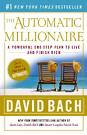 The Automatic Millionaire by David Bach is another superb book. Simply, make things automatic.
 We also like Rich Dad, Poor Dad by Robert Kiyosaki and his Cashflow games. Although we personally take a more conservative approach than what Robert does, his ideas on money will help you think outside the box.
 First, start with Dave Ramsey. If you do not read any other finacial planning book (you want Total Money Makeover), you will survive and thrive if you follow Dave's plan. We like to listen to Dave on the radio at least once a week to keep us motivated and on track. We listen over the internet for free.
 Millionaire Next Door is an eye opening look into what millionaires really live like. Understanding how rich people live, helps you to live in the same way. It is written by Thomas J. Stanley, and William D. Danko, two professors who began researching millionaires, and were surprised by what they found.
 The Automatic Millionaire by David Bach is another superb book. Simply, make things automatic.
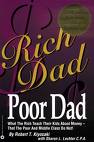 We also like Rich Dad, Poor Dad by Robert Kiyosaki and his Cashflow games. Although we personally take a more conservative approach than what Robert does, his ideas on money will help you think outside the box.
Subscribe to:
Posts (Atom)