When you start to wear your baby for the first time, you may have a lot of worries. What follows is a list of thoughts and ideas to help make your baby wearing experience better.
A good time to start trying is when your baby is sleepy.
Once you get your baby in the carrier, start moving. Take a walk.
If your baby doesn't like it, s/he will let you know it! They will start to squirm and cry. Your baby really doesn't mind being all squished up
Keep trying. Sometimes it takes a few tries before you and your baby get the hang of it.
Find an experienced baby wearer, and talk with them about their tricks. Watch and see how they do it. Try attending a local Baby Wearer meeting.
Check out the help from The Baby Wearer. They have wonderful resources to help you fix problems you may be having. They have step by step pictures, videos, and wonderful forums for you to ask questions on.
Have fun baby wearing!
Showing posts with label Support for Parents. Show all posts
Showing posts with label Support for Parents. Show all posts
Tuesday, April 29, 2008

Baby Wearing: what types of carriers?
I began "wearing" my babies almost ten years ago. The first carrier I ever tried was the OTSBH. I checked it out of a lending library that my lactation consultant had. I was in school at the time, and it became a life saver as I walked the two miles to school and sat in on my class with my newborn son. I soon purchased my own sling, but I choose a Mayawrap. The padding of the OTSBH made me sweat a little too much. My son was a big child, so having this sling was so helpful. There were not a lot of people around using baby carriers, so I stuck out quite a bit with my bright green and blue Maya, but there was no way I was going without it!
My Mayawrap got me through three babies, when I finally gave it to a good friend who had given birth to her fist child. During this time, as "new" baby carriers were being developed and marketed, I experimented with many of them. I can tie a baby on with most anything, and have often just used my coat in a pinch. My favorite carriers are the ones that are the least complicated, but versatile and comfortable. If you can only get one carrier choose between a ring sling or a structured carrier like an Ergo. I recommend that you have a few different types on hand, as you will use them for different things.
Personally, I have found that the structured carriers are my favorite. Once your baby can hold their heads up well (and even before with certain precautions), these carriers are the most convenient and comfortable of them all. I prefer a non-fussy one, like the YAMO (sadly you cannot purchase them in the US anymore), but there are other options available, like the patapum, ergo, and beco.
Next in line would come the ring slings. There are so many beautiful slings available today. I am partial to the unpadded Mayawraps though. They were the first of their kind, and they are of exceptional quality. I have tried making a few of my own ring slings, and I have never quite been able to reproduce the comfort and quality of a purchased sling. If your sewing skills are excellent, you should be able to make a custom carrier for a very good price.
Third, I like pouch style carriers and wraps. Pouches are the easiest to use, as you stick the baby in and go. The only issue you face with them is you will need two sizes to get a proper fit if you get a non-adjustable one, and if you get an adjustable one, the carrier becomes a little more complex (but not much). Wraps have a high learning curve, because they are one long piece of cloth that you tie around yourself and your baby. There are many different ways to do this, and you have to practice to find the one you and your baby like the best. Wraps are very, very comfortable are can be made from some beautiful fabrics. I have found them to be a little fiddly when I need to change positions to nurse, or when my child is in the 'up and down' phase. I love them for back carries when they are tiny and cannot hold their heads up very well yet, as the fabric cradles them well.
Fourth, are the Mei Tei. podegai, and other traditional fabric carriers. I have not found these to be comfortable, but other people really like them. I feel it it better to just spend the money on a soft structured carrier like the Patapum, your body will thank you for it in the long run. These are the types of carriers a lot of inexperienced baby wearing moms purchase because they do not want to pay the price for the structured carrier, and these carriers are pretty to look at. They like them, but I never actually see them using them all that much, and pretty soon, their kids just get too heavy for them to comfortable wear. I can and do wear my 30 pound toddler in my structured carrier without any problems.
Last, don't spend your money on the Baby Bjorn, or other soft front pack type carriers. They are not worth it! You will not get your money's use out of them. Don't bother with the slings and carriers that you find at most chain stores. They are marketed for the trend of baby wearing, but they are not made well, and they usually will not work well.
Enjoy wearing your baby!
My Mayawrap got me through three babies, when I finally gave it to a good friend who had given birth to her fist child. During this time, as "new" baby carriers were being developed and marketed, I experimented with many of them. I can tie a baby on with most anything, and have often just used my coat in a pinch. My favorite carriers are the ones that are the least complicated, but versatile and comfortable. If you can only get one carrier choose between a ring sling or a structured carrier like an Ergo. I recommend that you have a few different types on hand, as you will use them for different things.
Personally, I have found that the structured carriers are my favorite. Once your baby can hold their heads up well (and even before with certain precautions), these carriers are the most convenient and comfortable of them all. I prefer a non-fussy one, like the YAMO (sadly you cannot purchase them in the US anymore), but there are other options available, like the patapum, ergo, and beco.
Next in line would come the ring slings. There are so many beautiful slings available today. I am partial to the unpadded Mayawraps though. They were the first of their kind, and they are of exceptional quality. I have tried making a few of my own ring slings, and I have never quite been able to reproduce the comfort and quality of a purchased sling. If your sewing skills are excellent, you should be able to make a custom carrier for a very good price.
Third, I like pouch style carriers and wraps. Pouches are the easiest to use, as you stick the baby in and go. The only issue you face with them is you will need two sizes to get a proper fit if you get a non-adjustable one, and if you get an adjustable one, the carrier becomes a little more complex (but not much). Wraps have a high learning curve, because they are one long piece of cloth that you tie around yourself and your baby. There are many different ways to do this, and you have to practice to find the one you and your baby like the best. Wraps are very, very comfortable are can be made from some beautiful fabrics. I have found them to be a little fiddly when I need to change positions to nurse, or when my child is in the 'up and down' phase. I love them for back carries when they are tiny and cannot hold their heads up very well yet, as the fabric cradles them well.
Fourth, are the Mei Tei. podegai, and other traditional fabric carriers. I have not found these to be comfortable, but other people really like them. I feel it it better to just spend the money on a soft structured carrier like the Patapum, your body will thank you for it in the long run. These are the types of carriers a lot of inexperienced baby wearing moms purchase because they do not want to pay the price for the structured carrier, and these carriers are pretty to look at. They like them, but I never actually see them using them all that much, and pretty soon, their kids just get too heavy for them to comfortable wear. I can and do wear my 30 pound toddler in my structured carrier without any problems.
Last, don't spend your money on the Baby Bjorn, or other soft front pack type carriers. They are not worth it! You will not get your money's use out of them. Don't bother with the slings and carriers that you find at most chain stores. They are marketed for the trend of baby wearing, but they are not made well, and they usually will not work well.
Enjoy wearing your baby!
Monday, January 22, 2007
Friday, December 08, 2006
Montessori
 Instead of trying to tell you about Montessori education, I am going to share with you two of my favorite websites.
Michael Olaf this is a wonderful catalog that has great information about the Montessori approach. I have discovered many great ideas and tools that I have started to use in my home.
Montessori Materials this is a resource that helps you build your own Montessori materials that this educational philosophy is known for. I have used a few of their print outs, and searched their other web links for other great resources.

 If you are interested at all in Montessori, I encourage you to read Maria Montessori's books. Hearing what this philosophy is all about from the person that created it will give you the best understanding of it.
Another great resource is Montessori From The Start by Paula Polk Lillard.
For older children, read Children Who are Not Yet Peaceful by Donna Goertz
Friday, December 01, 2006
Friday, November 24, 2006
More on Parental Connection
Beyond the day-to-day care, feeding, and maintenance of children, parents’ emotional or affective involvement in their children’s lives plays a key role in the overall well-being of their children. Children do not grow up into healthy adults in a vacuum. They need adults -- and most especially their parents -- who connect with them to reach their optimal potential. Adults other than a parent can help a child grow and develop, but it is the parent, who “loves them for free,” that will give them a safe and secure emotional base to stand on.
We have learned that parental interaction begins before birth. A fetus can hear, see, taste, and feel. Their sense of smell is acute at birth. Babies that have heard music played before birth, are calmed when they hear it after birth. A newborn recognizes his mother’s voice. These are just a few ways that parents interact, often without even knowing it.
 After a baby is born, if kept physically close to her mother, much interaction can occur. That baby is wired to find her way to her mother’s breast, gaze into her eyes, and get her needs met (Klaus & Klaus, 1998). If this closeness is continued throughout the early days and months, a baby and mother pair will get to know each other and become well attuned to one another. This is a type of beneficial parental interaction that is needed and often not received in our modern Western culture.
We are used to finding ways to separate ourselves from our children, rather than finding ways to include them in our lives. Parental interaction should start as early as possible, and the first few days after birth are one of the most important times. One of the best times to educate parents, is as expectant parents. Many are seeking to figure out how they want to parent, and are more open to input from others. If parents are not reached at this stage, there are other times and other moments to help parents see just how important it is to interact with their children.
Very young children absorb a great deal of what is going on around them. They need a consistent care giver, optimally a parent, to observe, mimic, and learn from. They again need a safe base to come back to as they explore their world around them. Children learn who they are just by being with a parent most of the time. As they shadow their mom (and dad), they figure out how they fit into the world on an emotional and social level. When a young child stands on a chair beside his mother to help her make food for dinner, or to wash the dishes, he gains a sense of fulfillment, a sense of worth. He knows he is part of something; he belongs. He gets to talk with mom and stretch his verbal abilities, he learns about the work he is doing, and yet he enjoys it all. Mom gets to slow down and get to know her son better and connect with him.
 As children grow, they may spend more and more time away from their parents, but they still need that safe base to return to. When a child struggles at school, she wants to come home and feel that she is still loveable, still worthwhile. Mom and Dad need to take the time to reconnect with her over and over again. Her sense of self counts on it. This does not mean that mom and dad give her a life free of struggle, but that they become the soft place to land when she falls.
Adolescents need just as much time and interaction as their younger counterparts; some say they need even more. Adolescents still need hugs and affection from their parents, these communication lines still need to be open. Adult children also need loving interaction with their parents. It never goes away. Parenting is more than food, shelter and clothing, it is a nurturing that can be found in these, yet is found in so many other needed interactions with children.
Parental emotional involvement is such a key element to raising happy and healthy children. There is not enough support in our culture for ideal parenting. Mother’s who choose to stay home with their children often do so facing isolation, lower socio-economic status, and contempt from their working female counterparts. The majority of social outlets are mind numbingly dull or not child friendly. It is no wonder many mothers reject the idea of staying home, even if they could afford to.
Our entire society suffers when children do not get the parental interaction they need. People need to see the seriousness of this, and be given real ways to make changes to help the children in their lives. It is not an easy task. I think most parents have problems giving of themselves at times, largely because loving parental involvement is not the norm. Loving parents are not scarce, what is scarce is the “know how” to put that love into action to create the type of connection children need.
Klause, M.H. & Klause, P.H. (1998). Your Amazing Newborn. Reading, Massachusetts: Perseus Books.
We have learned that parental interaction begins before birth. A fetus can hear, see, taste, and feel. Their sense of smell is acute at birth. Babies that have heard music played before birth, are calmed when they hear it after birth. A newborn recognizes his mother’s voice. These are just a few ways that parents interact, often without even knowing it.
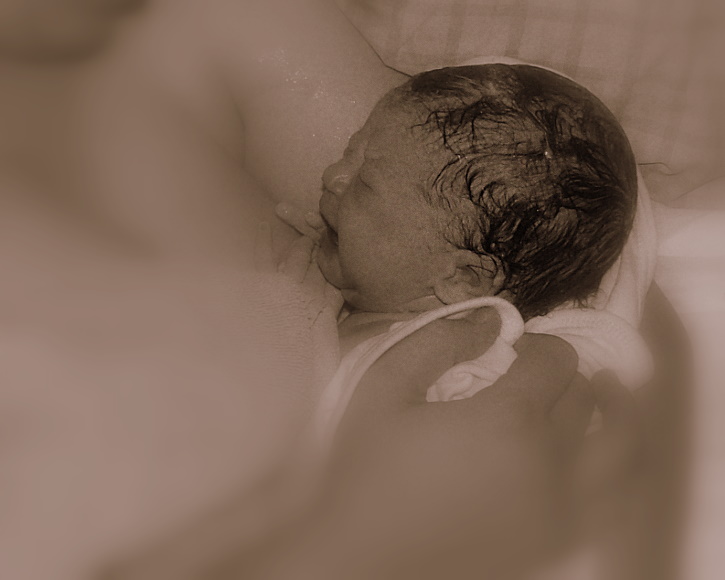 After a baby is born, if kept physically close to her mother, much interaction can occur. That baby is wired to find her way to her mother’s breast, gaze into her eyes, and get her needs met (Klaus & Klaus, 1998). If this closeness is continued throughout the early days and months, a baby and mother pair will get to know each other and become well attuned to one another. This is a type of beneficial parental interaction that is needed and often not received in our modern Western culture.
We are used to finding ways to separate ourselves from our children, rather than finding ways to include them in our lives. Parental interaction should start as early as possible, and the first few days after birth are one of the most important times. One of the best times to educate parents, is as expectant parents. Many are seeking to figure out how they want to parent, and are more open to input from others. If parents are not reached at this stage, there are other times and other moments to help parents see just how important it is to interact with their children.
Very young children absorb a great deal of what is going on around them. They need a consistent care giver, optimally a parent, to observe, mimic, and learn from. They again need a safe base to come back to as they explore their world around them. Children learn who they are just by being with a parent most of the time. As they shadow their mom (and dad), they figure out how they fit into the world on an emotional and social level. When a young child stands on a chair beside his mother to help her make food for dinner, or to wash the dishes, he gains a sense of fulfillment, a sense of worth. He knows he is part of something; he belongs. He gets to talk with mom and stretch his verbal abilities, he learns about the work he is doing, and yet he enjoys it all. Mom gets to slow down and get to know her son better and connect with him.
 As children grow, they may spend more and more time away from their parents, but they still need that safe base to return to. When a child struggles at school, she wants to come home and feel that she is still loveable, still worthwhile. Mom and Dad need to take the time to reconnect with her over and over again. Her sense of self counts on it. This does not mean that mom and dad give her a life free of struggle, but that they become the soft place to land when she falls.
Adolescents need just as much time and interaction as their younger counterparts; some say they need even more. Adolescents still need hugs and affection from their parents, these communication lines still need to be open. Adult children also need loving interaction with their parents. It never goes away. Parenting is more than food, shelter and clothing, it is a nurturing that can be found in these, yet is found in so many other needed interactions with children.
Parental emotional involvement is such a key element to raising happy and healthy children. There is not enough support in our culture for ideal parenting. Mother’s who choose to stay home with their children often do so facing isolation, lower socio-economic status, and contempt from their working female counterparts. The majority of social outlets are mind numbingly dull or not child friendly. It is no wonder many mothers reject the idea of staying home, even if they could afford to.
Our entire society suffers when children do not get the parental interaction they need. People need to see the seriousness of this, and be given real ways to make changes to help the children in their lives. It is not an easy task. I think most parents have problems giving of themselves at times, largely because loving parental involvement is not the norm. Loving parents are not scarce, what is scarce is the “know how” to put that love into action to create the type of connection children need.
Klause, M.H. & Klause, P.H. (1998). Your Amazing Newborn. Reading, Massachusetts: Perseus Books.
Monday, November 20, 2006
Connection Parenting
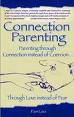 Pam Leo has written a simple handbook to help parents start to "parent through connection instead of coercion, through love instead of fear." Each chapter is written with one way to connect, such as respecting children, listening to children's feelings, and decoding children's behavior. Each chapter is then followed by journaling exercises for the parent to do, to help them be able to understand and more fully implement the ideas they are learning about. There is also a great list of resources listed in the back of the book.
When I picked up this book to read it, I was being pretty hard on myself as a parent. Through reading this book, I was able to discover that I did have some talents in parenting, and it helped me to use what I do well more, and not be quite so hard on myself for what I may not do as well as I like.
Wednesday, November 15, 2006
Tools for Parenting
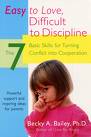 As a veteran mother, and a family life education hobbyist, I have often wondered just why I have a hard time putting into practice the ideals I hold so dear. Reading about what I believe in only gets me so far. Working on parenting programs (a good one is Becky Bailey's Easy to Love, Difficult to Discipline) may get me a step farther, but I always seem to fall back into poor parenting behaviors when the stress level gets high. This is extremely frustrating and disheartening for me.
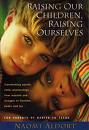 I discovered Naomi Aldort's ideas, bought her book Raising Our Children, Raising Ourselvess, and found some hope. She is realistic in the fact that some behaviors and thought patterns we hold may take years to break, yet gives us the courage to keep trying. Many of Aldort's ideas are based off of Byron Katie. Byron founded The Work, which is a process of questioning your thoughts. I have found that when I use her four questions to rethink my thoughts, I am freed from emotional baggage, and able to concentrate on parenting the way I want to. If you find yourself knowing what you want to do, and unable to do it, I recommend looking into Namoi Aldort's and Byron Katie's ideas.
Friday, November 10, 2006
Feeding the Family
 Eating is usually a topic that becomes important to families at some point in time. I know food and eating more healthfully has been an interest of mine for a very long time! Eating can take on a whole new dimension when the family is involved. There is so much to consider. Is is okay to eat in front of the TV? Can we bring books to the table? Do we eat breakfast together as well as dinner? Are the kids allowed to complain about what they are served? Do they have to eat it? How do we carry on pleasant conversations at the dinner table with young children? Learning how to balance family members' preferences and still eat well (whether that is healthy or just tasting good!) can be another challenge as well.
Here is one article that shows the importance of having at least one family meal together. Meals Matter shares another article about the nutritional benefits of eating together as a family regularly. Iowa State Extention has helpful article on how to get the family to eat together.
There are a plethora of cookbooks, meal time organizers, menu-planners, and helpful hints out there to feed your family. If something works for you, use it! It doesn't have to be hard to fix a simple meal for your family, and get them to eat it. Here are a few of my favorite resources:
- Saving Dinner or Menu Mailer
- The Joy of Cooking
- Super Baby Food
- Feeding the Whole Family
- Nourishing Traditions
- Earth Fare's free menu planning program
Wednesday, November 08, 2006
Mothering and Fathering by Tine Thevenin
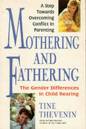 I read this book many years ago and found it very helpful in accepting how my husband parented differently than I did. Here are three Amazon reviews for you to read, and one opposing view written by a father.
If you are seeking to understand why your partner does things differently than you, this book may shed some light for you. This is written by the author of The Family Bed.
Monday, November 06, 2006
Parenting Support Groups
Holistic Moms Network
If you are a holistic parent or are interested in learning more about natural options, then the HMN is for you!
MOMS Club
Local support groups meet during the day, are non-sectarian and welcome all at-home mothers and their children. Local chapters sponsor regular meetings with speakers and discussion topics, family parties, playgroups, baby-sitting co-ops, special activity groups, community service projects and more.
La Leche League
La Leche League International provides support and encouragement to breastfeeding mothers, as well as a wealth of information on the subject. Regular support meetings can lead to the development of friendships, as well as contacts for playgroups and baby-sitting co-ops.
API International
API advocates attachment parenting methods to develop and fulfill a child's need for trust, empathy and affection to create secure relationships.
Because I Love You
Because I Love You (BILY) is a parent support group designed to help parents whose children ( of all ages ) have behavioral problems. These problems are in the areas of, but not limited to: attitude, substance abuse, school attendance, physical/ verbal abuse, running away, and curfew.
MOPS International
MOPS (Mothers of PreSchoolers) provides fellowship for mothers with young children, offering a nurturing, caring environment with a spiritual focus. Meetings follow the school calendar. Moms share information, have group discussion time, and learn a craft, while children play nearby with supervision.
Mothers and More
M&M is a national support and advocacy group for women who have altered their career paths in order to care for their children at home.
National Association of Mother Centers
NAMC is a non-profit umbrella organization which includes more than 50 Mother's Centers across the country. Local centers sponsor workshops, seminars, groups and special events and serve as a place where mothers can come together with other mothers and members of the professional community to explore the experience of becoming and being mothers.
Friday, November 03, 2006
Aletha Solter, her works reviewed
 Aletha Solter, a student of Jean Piaget, has written three books for parents that have some valuable thoughts in them. The Aware Baby, Tears and Tantrums, and Helping Young Children Flourish each share a similar message, that is sometime babies just need to cry.
I discovered her books before my third child was born, and gained another parenting tool that became very helpful to me. I have found the cry it out beliefs to be very detrimental to children, and their relationships with their parents. When an infant is left to cry, he learns that he is not heard, and he will not be responded to. He misses out on one of Erik Erikson's stages of development, that of being able to trust. So, I responded to my first two children's cries, even though it was hard at times to do so. I always tried to get them to stop crying, and if they didn't, I felt that I was doing something wrong as a parent. I felt guilty and overwhelmed at times, because I didn't know how to "help" my child.
Solter's ideas helped me to see that I still needed to respond to my children's cries (this is something I just knew instinctively I needed to do), but that sometimes, after all other needs are met, a baby (or child) still has a need to cry.
I like to relate it to myself. When I am distraught, and feel like crying, the best thing for me to do it cry and work it out that way. Often what we do to babies, is to tell them to be quiet, by bouncing, putting a pacifier in their mouth, shushing them, telling them don't have to cry, feeding them, and the list goes on and on. If I was crying, and someone told me to be quiet, or tried to get me to stop when I really needed a good cry, I would resent it. I would not like it, and if I was not allowed to cry, those emotions would be bottled up inside.
All this said, a baby should NEVER be left to cry alone. She should be held close by and you should focus your loving attention on her as she cries. Solter's books go into much greater detail. There is good information to think about in her books. The downside is that the format isn't one that most of us are used to. It is not flashy, and it is set up in a question/answer format. There may be some information that some parents do not feel fits them (as in most books), and if you find that this is the case, then by all means, do not use those ideas!
One of the best things that this book did for me, was to help me realize that crying was not a sign of me being a "bad" parent.
Wednesday, November 01, 2006
Parenting From The Heart by Jan Hunt
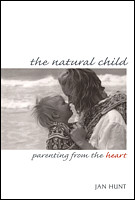
This book gently leads a parent to a healthier relationship with her child/ren. It is a reference work that parents can come to again and again to receive a fulfilling boost of approval, yet it challenges us to do better. This book is one of the few books that have helped me truly understand what a child really is, namely another human being on the sojourn of life, albeit in a smaller package. It made me aware that because of that smaller package, children are so often taken advantage of. How many times have you talked about your child's faults to another adult, as your baby stands there and hears each word you say? Would you do the same to another adult? Would you want someone to do that to you? This book addresses that, and helps parents find a better way.
visit Jan Hunt's website The Natural Child Project
Saturday, October 28, 2006
Subscribe to:
Posts (Atom)