I have been getting involved in coupons. I was always under the belief that they really didn't save you much money, because you could always buy generic cheaper. Well, I have discovered that this is not always the case. Coupons can save you a lot of money. Shopping smart and changing the way you look at how you shop are key ingredients to saving a lot of money.
I discovered two blogs that got me started in coupons. Money Saving Moms, and IMommies. It has taken me about a month to start feeling the coupon love, and really get what I am doing, but I have already scored some great deals. I got $60 worth of free cheese from Target, $.10 full size toothpaste from Lowes food, a free box of cereal from Food Lion, and quite a few deals from CVS. I signed up for a reduced rate Sunday paper to get coupons, and made a few mistakes at first, but overall, there are some great deals to be had out there with a little foresight and planning.
Some other resources that I am using are the Grocery Game to save myself some time in finding good deals. I signed up for their $1 for the first 4 weeks, to see how it worked, and I have discovered that for my area, only the Kroger list is really worth paying for. Yes, it is a paid service, but I save a ton more than I spend on it. I have saved between 40-60% on groceries each time I have shopped at Kroger since using this list, and a lot of has been without coupons.
This has taken some time initially to wrap my brain around it all, and begin to organize my personal system, but it has been fun each and every time I save a bundle or get a really good deal on something.
Here are some tips that might be helpful if you want to shop the deals.
1. Use online coupons.
2. Learn your local stores' coupon policy
3. Use the internet to find the deals
4. Shop CVS and other drug stores
5. Only buy the things on your list
6. Stock up when the price is great... learn to have a stockpile and then "shop" from home as needed.
7. Don't buy what you don't need, unless it is free (you can then donate it to charity)
8. Loose brand consciousness... if an item is free would you try it?
I am still in the learning process of this all. One area I am working on is working within a budget. I am totally excited to test myself on how cheap I can be with our family's food budget. I am going to start very slow and work my way down. I plan on keeping up and even raising my standards in the quality of the food I purchase while doing this. Are you ready to try?
Wednesday, February 20, 2008

Monday, July 23, 2007
It's been a long, long time

You thought I had forgotten about you, didn't you? No, not me. I have just had many other things taking my time away from blogging. For a little while it was blogging-smlogging. I really wasn't in to it for a bit. But, as I feel I have something valuable here, I feel it best to continue.
I have gotten myself in an amazing frugal place at present. How did this happen? I signed up to get a book for free, if I would review it on my blog. Janine Bolon of Smart Cents, has set a wonderful example of just how reachable financial Independence can be. My husband and I read this book, and realized that we knew most of what was contained within, but we had not actually put some of it to the test. This book has been far more motivating to me than I originally thought. We finally took the time to write down our financial goals. We created an excel timeline which listed each month until we turned 50. We put important info such as the ages our children will be, major purchases we know will need to take place (cars, home improvement, etc.), and debt. If we tighten our belts, we saw just how easily our financial goals could be met. This timeline is posted on our bedroom wall, and is VERY motivating. Janine Bolon's book, Money, It's Not Just For Rich People has spurred a wonderful sense of freedom and fulfillment within my husband and I. My favorite part of the book is when Joline shares her personal story. The truth of her financial freedom, compared to what others thought was happening is refreshing to hear!
Her book also helped me to start rereading a few other great financial works of art. The Complete Tightwad Gazette, and Your Money or Your Life. More to come on those soon.
Sunday, February 25, 2007
Classical Education
When I first discovered Classical Education, I was very excited and intrigued with it. After reading a lot about it, and coming to understand how my children are best educated, I would discourage others from using this method rigidly. Everyone wants their children to excel, and be the best they can be, but I just do not agree that it is good to fill a young child's mind with facts upon facts that they then learn to tie together as they age. This method is too harsh for young children, and just ends up recreating school at home if homeschooling, or pushes kids to do more than they are able if in school. It focuses on workbooks, and lots and lots of memorisation. It is very rigid, with a set formula for each grade (age). The Well Trained Mind is the book to read if you want to learn about it.
That said, classics (which is not just limited to books, a classic can be anything that you come back to over and over) are great teachers, and they should be used as the main source of education. Classical Education is not about classics though. It is the form of education that was supposed to have been used in the classical past, using the trivium as its foundation.
That said, classics (which is not just limited to books, a classic can be anything that you come back to over and over) are great teachers, and they should be used as the main source of education. Classical Education is not about classics though. It is the form of education that was supposed to have been used in the classical past, using the trivium as its foundation.
Wednesday, February 21, 2007
An update
Well, this blog was originally created for a class I was taking, and I always meant to continue with it when the class was over. I have numerous ideas that I have started, and still intend to post at some point in time, but just exactly when that will be, I don't know. I am alive and doing well for anyone concerned ;-)
Monday, January 22, 2007
Wednesday, January 03, 2007
Happy Newness
 Transitions can be a lot of things. I often find myself struggling with change, but this year, the transition and resolution planning has gone very smoothly. In the spirit of betterment, I post a picture of our fancy new organizational center. This came to be from many different sources, much discussion with my husband, and meditating on what our family really needed to take us to the next level. Let me share with you where the ideas came from, and what we have done, in hopes that you may figure out something that will work and fit with you.
I love the mommy craft bloggers out there. I got the patchwork pocket idea from Shim + Sons, and since I am not as talented as she, I kind of did my own thing out of the little scrap fabric I had on hand. Plus, we had a very large cork board already, so I made do somehow. Even though they are uneven, I was very pleased with myself for turning them out.
The pockets are actually chore pockets. The chore pocket idea was taken from A Thomas Jefferson Education Home Companion. Diann Jeppson uses this with her family, and the system really resonated with me. Basically, the top pockets represent a room or area in your home. They are filled up with tickets (blank index cards here) of all the jobs that need to be done to keep that room or area clean. We kept it fairly simple with things like sweep the floor, dust the light, etc. Each person is then given two chore pockets ('to do', and 'done'). I dole out four jobs for each person each day (whatever seems most needed). My three year old only participates as he starts to show interest, and my six year old isn't required to do all four if it seems to be stressing him out too much. My eight year old is required to do them all, and so far has done so without too much disdain. Part of the joy is that I have four chores too, and so does Dad. We can do the chores at any time during the day, but at 4pm, whatever isn't done need to be done then.
I like this system because it is VERY flexible, yet it allows us to get a lot done with very little struggle or hassle. The kids like it because they know what they have to do, and then it's done. I'm really happy, because I don't have to do it all. Little things I never thought about (like dusting the ceiling fans) are getting done. I highly recommend Diann Jeppson's book if this system intrigues you, and you want to understand it better.
Next, I bought Managers of Their Home (MOTH) to help me in scheduling my days. The middle section with the colorful strips of paper is my first attempt at using the MOTH plan. I resist schedules and have a very difficult time sticking to them, so I really worried about using this and "failing". So far, I have found this schedule to be very helpful for our family, even though we do not use it rigidly at all. It acts as a guide, a kind of ideal day, or reference point for us. There are certain parts of it that we stick to 100%, and others that we can throw out at will. Just having it posted on the board somehow relieves some tension.
The last part of this is my menu posted with what we can eat for snacks as well, so when my kids say they are hungry, we can look and see what we can snack on that day (today it was a fruit smoothie, yum!).
*MOTH is a Christian ministry, so for some people this book may conflict with personal beliefs. I also wanted to note that I do not believe in scheduling babies for eating or sleeping.
Thursday, December 14, 2006
If you are waiting for more posts....
My life before Christmas has been a bit hectic, so I will be taking a small blogging break before I bring you more family life education...
I have a lot in the works, so there will definitely be more to come.
Happy Holidays!
I have a lot in the works, so there will definitely be more to come.
Happy Holidays!
Friday, December 08, 2006
Montessori
 Instead of trying to tell you about Montessori education, I am going to share with you two of my favorite websites.
Michael Olaf this is a wonderful catalog that has great information about the Montessori approach. I have discovered many great ideas and tools that I have started to use in my home.
Montessori Materials this is a resource that helps you build your own Montessori materials that this educational philosophy is known for. I have used a few of their print outs, and searched their other web links for other great resources.

 If you are interested at all in Montessori, I encourage you to read Maria Montessori's books. Hearing what this philosophy is all about from the person that created it will give you the best understanding of it.
Another great resource is Montessori From The Start by Paula Polk Lillard.
For older children, read Children Who are Not Yet Peaceful by Donna Goertz
Tuesday, December 05, 2006
Top Ten Toy lists
Since the holidays are upon us, I thought I would share a fun resource. Luckybeans blog. Along these same lines, if you'd like some fun activities to do with your children, check out Kiddley.
And here are my kids favorite toys:
1. Legos
2. Play silks
3. Jr. Erector sets (we don't seem to like the metal ones)
4. Small plastic animals
5. Cars and Trucks
6. Art supplies- crayons, markers, LOTS of paper, scissors, glue, beeswax crayons, pens, pencils, stapler/staples, chenille stems, etc.
7. Blocks, especially KEVA, and large wooden rainbow
8. Army men and Nerf guns
9. Bubbles, sidewalk chalk, and dirt
10. Waldorf style dolls
Friday, December 01, 2006
Wednesday, November 29, 2006
Charlotte Mason
Charlotte Mason wrote a lengthy series of books on Education. Her philosophy of education includes forming good habits from birth, nature study, short lessons, classics, "twaddle" free books, and parental involvement. This is a popular homeschool method of education.
Here are a number of good websites that go into depth about what Charlotte Mason Education is all about.
The Charlotte Mason Research and Supply Company
The A B C s of Charlotte Mason
Simply Charlotte Mason
Penny Gardner's site
Ambleside Online a free online curriculum
Here are a number of good websites that go into depth about what Charlotte Mason Education is all about.
The Charlotte Mason Research and Supply Company
The A B C s of Charlotte Mason
Simply Charlotte Mason
Penny Gardner's site
Ambleside Online a free online curriculum
A Thomas Jefferson Education

This book, by Oliver DeMille is a must read. The leadership education he describes in this book is one that many parents are seeking for their children. These ideas can be implemented with many other "brands" of education. The 7 key elements to this are:
- Classics not Textbooks
- Mentors not Professors
- Inspire not Require
- Quality not Conformity
- Structure Time not Content
- Simplicity not Complexity
- You not Them
Our Favorite Family Read Alouds
One of my family's favorite activities is reading aloud together. Reading together is important to a child's education and development. If kids are too young to sit still for long periods, offer them quiet activities that they can work on while you are reading. Here are some of our family's favorites.
 Little Britches Series by Ralph Moody (this is our favorite!)
Little House Books
Narnia Series
Mrs. Piggle Wiggle series
A Child's Garden of Verses
Winnie the Pooh
 Little Britches Series by Ralph Moody (this is our favorite!)
Little House Books
Narnia Series
Mrs. Piggle Wiggle series
A Child's Garden of Verses
Winnie the Pooh
Monday, November 27, 2006
Educating Children
 There are many ideas out there on the best way to educate children. I feel it is important to review and look at the philosophies available and then pick and choose those that fit with how your family works.
For your reference, I am coming from a homeschool prospective, but each of these philosophies do have schools that follow their principles. I have my own personal beliefs about the best way to educate children, yet I am also willing to "roll with punches" as they come and change what isn't working. Parents must all choose what they feel is best for them when it comes to educating their children, whatever that may be.
In the near future some of my posts will be about different educational philosophies out there today. These ideas are important from the beginning of childhood, as many of them offer discipline ideas and parenting ideas that one can start from right away.
Friday, November 24, 2006
More on Parental Connection
Beyond the day-to-day care, feeding, and maintenance of children, parents’ emotional or affective involvement in their children’s lives plays a key role in the overall well-being of their children. Children do not grow up into healthy adults in a vacuum. They need adults -- and most especially their parents -- who connect with them to reach their optimal potential. Adults other than a parent can help a child grow and develop, but it is the parent, who “loves them for free,” that will give them a safe and secure emotional base to stand on.
We have learned that parental interaction begins before birth. A fetus can hear, see, taste, and feel. Their sense of smell is acute at birth. Babies that have heard music played before birth, are calmed when they hear it after birth. A newborn recognizes his mother’s voice. These are just a few ways that parents interact, often without even knowing it.
 After a baby is born, if kept physically close to her mother, much interaction can occur. That baby is wired to find her way to her mother’s breast, gaze into her eyes, and get her needs met (Klaus & Klaus, 1998). If this closeness is continued throughout the early days and months, a baby and mother pair will get to know each other and become well attuned to one another. This is a type of beneficial parental interaction that is needed and often not received in our modern Western culture.
We are used to finding ways to separate ourselves from our children, rather than finding ways to include them in our lives. Parental interaction should start as early as possible, and the first few days after birth are one of the most important times. One of the best times to educate parents, is as expectant parents. Many are seeking to figure out how they want to parent, and are more open to input from others. If parents are not reached at this stage, there are other times and other moments to help parents see just how important it is to interact with their children.
Very young children absorb a great deal of what is going on around them. They need a consistent care giver, optimally a parent, to observe, mimic, and learn from. They again need a safe base to come back to as they explore their world around them. Children learn who they are just by being with a parent most of the time. As they shadow their mom (and dad), they figure out how they fit into the world on an emotional and social level. When a young child stands on a chair beside his mother to help her make food for dinner, or to wash the dishes, he gains a sense of fulfillment, a sense of worth. He knows he is part of something; he belongs. He gets to talk with mom and stretch his verbal abilities, he learns about the work he is doing, and yet he enjoys it all. Mom gets to slow down and get to know her son better and connect with him.
 As children grow, they may spend more and more time away from their parents, but they still need that safe base to return to. When a child struggles at school, she wants to come home and feel that she is still loveable, still worthwhile. Mom and Dad need to take the time to reconnect with her over and over again. Her sense of self counts on it. This does not mean that mom and dad give her a life free of struggle, but that they become the soft place to land when she falls.
Adolescents need just as much time and interaction as their younger counterparts; some say they need even more. Adolescents still need hugs and affection from their parents, these communication lines still need to be open. Adult children also need loving interaction with their parents. It never goes away. Parenting is more than food, shelter and clothing, it is a nurturing that can be found in these, yet is found in so many other needed interactions with children.
Parental emotional involvement is such a key element to raising happy and healthy children. There is not enough support in our culture for ideal parenting. Mother’s who choose to stay home with their children often do so facing isolation, lower socio-economic status, and contempt from their working female counterparts. The majority of social outlets are mind numbingly dull or not child friendly. It is no wonder many mothers reject the idea of staying home, even if they could afford to.
Our entire society suffers when children do not get the parental interaction they need. People need to see the seriousness of this, and be given real ways to make changes to help the children in their lives. It is not an easy task. I think most parents have problems giving of themselves at times, largely because loving parental involvement is not the norm. Loving parents are not scarce, what is scarce is the “know how” to put that love into action to create the type of connection children need.
Klause, M.H. & Klause, P.H. (1998). Your Amazing Newborn. Reading, Massachusetts: Perseus Books.
We have learned that parental interaction begins before birth. A fetus can hear, see, taste, and feel. Their sense of smell is acute at birth. Babies that have heard music played before birth, are calmed when they hear it after birth. A newborn recognizes his mother’s voice. These are just a few ways that parents interact, often without even knowing it.
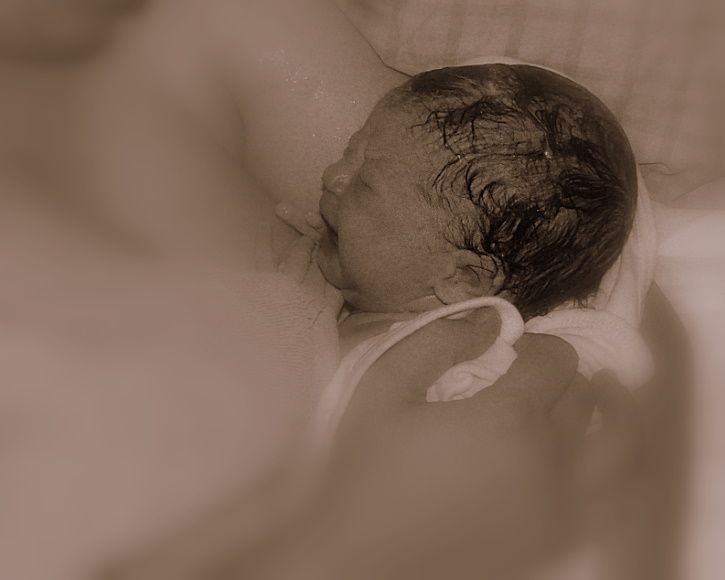 After a baby is born, if kept physically close to her mother, much interaction can occur. That baby is wired to find her way to her mother’s breast, gaze into her eyes, and get her needs met (Klaus & Klaus, 1998). If this closeness is continued throughout the early days and months, a baby and mother pair will get to know each other and become well attuned to one another. This is a type of beneficial parental interaction that is needed and often not received in our modern Western culture.
We are used to finding ways to separate ourselves from our children, rather than finding ways to include them in our lives. Parental interaction should start as early as possible, and the first few days after birth are one of the most important times. One of the best times to educate parents, is as expectant parents. Many are seeking to figure out how they want to parent, and are more open to input from others. If parents are not reached at this stage, there are other times and other moments to help parents see just how important it is to interact with their children.
Very young children absorb a great deal of what is going on around them. They need a consistent care giver, optimally a parent, to observe, mimic, and learn from. They again need a safe base to come back to as they explore their world around them. Children learn who they are just by being with a parent most of the time. As they shadow their mom (and dad), they figure out how they fit into the world on an emotional and social level. When a young child stands on a chair beside his mother to help her make food for dinner, or to wash the dishes, he gains a sense of fulfillment, a sense of worth. He knows he is part of something; he belongs. He gets to talk with mom and stretch his verbal abilities, he learns about the work he is doing, and yet he enjoys it all. Mom gets to slow down and get to know her son better and connect with him.
 As children grow, they may spend more and more time away from their parents, but they still need that safe base to return to. When a child struggles at school, she wants to come home and feel that she is still loveable, still worthwhile. Mom and Dad need to take the time to reconnect with her over and over again. Her sense of self counts on it. This does not mean that mom and dad give her a life free of struggle, but that they become the soft place to land when she falls.
Adolescents need just as much time and interaction as their younger counterparts; some say they need even more. Adolescents still need hugs and affection from their parents, these communication lines still need to be open. Adult children also need loving interaction with their parents. It never goes away. Parenting is more than food, shelter and clothing, it is a nurturing that can be found in these, yet is found in so many other needed interactions with children.
Parental emotional involvement is such a key element to raising happy and healthy children. There is not enough support in our culture for ideal parenting. Mother’s who choose to stay home with their children often do so facing isolation, lower socio-economic status, and contempt from their working female counterparts. The majority of social outlets are mind numbingly dull or not child friendly. It is no wonder many mothers reject the idea of staying home, even if they could afford to.
Our entire society suffers when children do not get the parental interaction they need. People need to see the seriousness of this, and be given real ways to make changes to help the children in their lives. It is not an easy task. I think most parents have problems giving of themselves at times, largely because loving parental involvement is not the norm. Loving parents are not scarce, what is scarce is the “know how” to put that love into action to create the type of connection children need.
Klause, M.H. & Klause, P.H. (1998). Your Amazing Newborn. Reading, Massachusetts: Perseus Books.
Wednesday, November 22, 2006
Sex Education
Douglas Kirby has researched many different programs to find which type of program is the most effective at keeping youth from risky behaviors. I was intrigued by the information from this article. I feel we can use this information to get the type of programs we want for our children in our schools. You will need Adobe to download it.
Monday, November 20, 2006
Connection Parenting
 Pam Leo has written a simple handbook to help parents start to "parent through connection instead of coercion, through love instead of fear." Each chapter is written with one way to connect, such as respecting children, listening to children's feelings, and decoding children's behavior. Each chapter is then followed by journaling exercises for the parent to do, to help them be able to understand and more fully implement the ideas they are learning about. There is also a great list of resources listed in the back of the book.
When I picked up this book to read it, I was being pretty hard on myself as a parent. Through reading this book, I was able to discover that I did have some talents in parenting, and it helped me to use what I do well more, and not be quite so hard on myself for what I may not do as well as I like.
Friday, November 17, 2006
10 Tips to Save Money

These are all tips that I have found very useful in saving money. Many of them are more about adjusting our additudes about spending, then about finding a good deal.
1. Plan a menu, make a grocery list, and shop at your discount grocer.
2. Don't shop for entertainment. If you need a shopping fix, go to the public library and check out a bunch of books.
3. Find a good thrift store, and shop there... this too can become a money wasting habit, so practice impulse control. You can buy most all of your clothing, furniture, and other household items, and still look good.
4. Learn to cook simple healthy meals. This not only cuts down on your food bill, but also your doctor bills.
5. Use complementary remedies at the first sign of illness. Many people find herbs, homeopathy, or just plain drinking water to stop a cold in its tracks.
6. Do you really need all the "good smelling" stuff out there, like candles, lotions, perfumes, plug-in room fresheners, sprays, etc.? Cut down on these money wasters.
7. Learn how to clean with distilled white vinegar and baking soda, and stop buying cleaning products.
8. If you have a baby, breastfeed, co-sleep (no crib to buy), and carry your baby (no stroller, swing, or baby seat needed). Cloth diapers also save a bundle of money, especially if you ask for them as shower presents. These may seem counter culture, but many very normal people raise their children this way today.
9. If you want to purchase a large or expensive item, write it down, and wait 30 days. Often when you come back to it, the "need" is no longer there to have it.
10. Challenge yourself to live creatively. See how you can make what it is you want with what you have. Learn to fix things instead of throwing them out. Remember that buying stuff does not make a person happy, but rather finding joy with what you have right now does.
Wednesday, November 15, 2006
Tools for Parenting
 As a veteran mother, and a family life education hobbyist, I have often wondered just why I have a hard time putting into practice the ideals I hold so dear. Reading about what I believe in only gets me so far. Working on parenting programs (a good one is Becky Bailey's Easy to Love, Difficult to Discipline) may get me a step farther, but I always seem to fall back into poor parenting behaviors when the stress level gets high. This is extremely frustrating and disheartening for me.
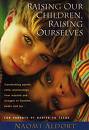 I discovered Naomi Aldort's ideas, bought her book Raising Our Children, Raising Ourselvess, and found some hope. She is realistic in the fact that some behaviors and thought patterns we hold may take years to break, yet gives us the courage to keep trying. Many of Aldort's ideas are based off of Byron Katie. Byron founded The Work, which is a process of questioning your thoughts. I have found that when I use her four questions to rethink my thoughts, I am freed from emotional baggage, and able to concentrate on parenting the way I want to. If you find yourself knowing what you want to do, and unable to do it, I recommend looking into Namoi Aldort's and Byron Katie's ideas.
Monday, November 13, 2006
Money
We all must earn money somehow in order to survive. Most of us marry with at least one bad money habit, usually more, and then we have to somehow blend our habits with the habits of another person. This can help in some aspects, but it can also really hurt. Finacnces can be a big source of contention in marriages and families. My husband and I are frugal hobbyists, and we enjoy reading about all the different ideas of how to save, make, and grow your money.
 First, start with Dave Ramsey. If you do not read any other finacial planning book (you want Total Money Makeover), you will survive and thrive if you follow Dave's plan. We like to listen to Dave on the radio at least once a week to keep us motivated and on track. We listen over the internet for free.
 Millionaire Next Door is an eye opening look into what millionaires really live like. Understanding how rich people live, helps you to live in the same way. It is written by Thomas J. Stanley, and William D. Danko, two professors who began researching millionaires, and were surprised by what they found.
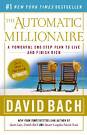 The Automatic Millionaire by David Bach is another superb book. Simply, make things automatic.
 We also like Rich Dad, Poor Dad by Robert Kiyosaki and his Cashflow games. Although we personally take a more conservative approach than what Robert does, his ideas on money will help you think outside the box.
 First, start with Dave Ramsey. If you do not read any other finacial planning book (you want Total Money Makeover), you will survive and thrive if you follow Dave's plan. We like to listen to Dave on the radio at least once a week to keep us motivated and on track. We listen over the internet for free.
 Millionaire Next Door is an eye opening look into what millionaires really live like. Understanding how rich people live, helps you to live in the same way. It is written by Thomas J. Stanley, and William D. Danko, two professors who began researching millionaires, and were surprised by what they found.
 The Automatic Millionaire by David Bach is another superb book. Simply, make things automatic.
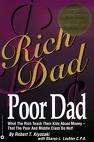 We also like Rich Dad, Poor Dad by Robert Kiyosaki and his Cashflow games. Although we personally take a more conservative approach than what Robert does, his ideas on money will help you think outside the box.
Subscribe to:
Posts (Atom)